
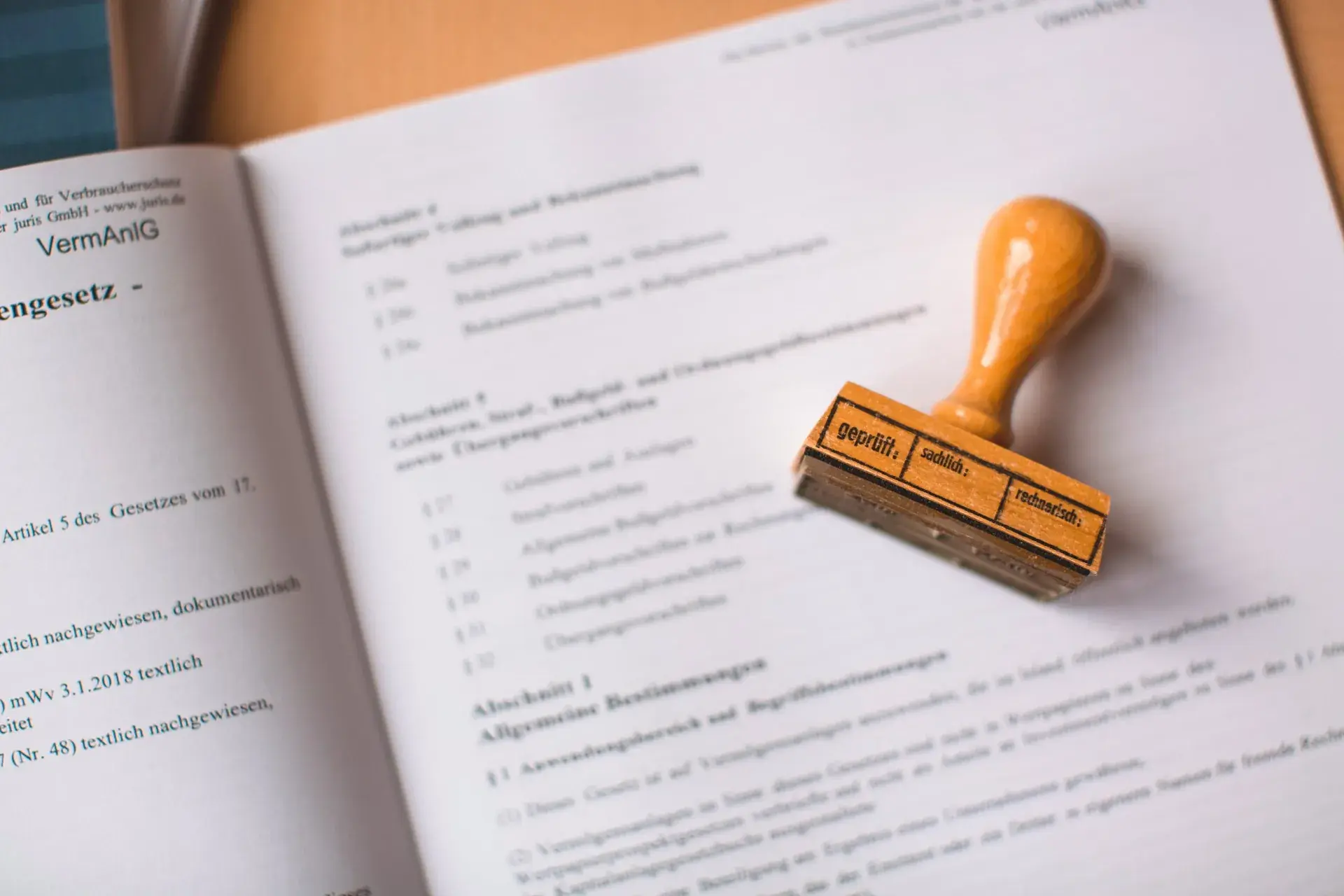
An Apostille is a certificate used under the 1961 Hague Apostille Convention to authenticate the origin of a public document for use in another participating country. It verifies the signature, the capacity of the person who signed the document and, where applicable, the seal or stamp. It does not certify that the document’s factual content is true and it does not translate the document.
Whether an Apostille is required depends on the issuing country, destination, document type and any treaty or EU exemption. For immigration files, check the document formalities before ordering records for the Digital Nomad Visa, University Student Visa or another Italian procedure rather than apostilling every page automatically.
How to Prepare an Apostilled Document for Italy
- 1
Identify the receiving authority
Confirm exactly what the Italian authority or consulate requires for the specific procedure.
- 2
Check the Convention and any exemption
Verify whether the issuing country and document fall under the Hague Apostille Convention or another exemption.
- 3
Use the competent issuing authority
Request the Apostille from the authority designated for that document in the country of origin.
- 4
Prepare the Italian translation
Use the translation and certification method accepted by the receiving Italian authority.
- 5
Submit the complete document set
Keep the original, Apostille and translation together in the form required for the application.
When an Apostille Is Used
The Apostille Convention applies to public documents exchanged between countries for which the Convention is in force. Typical examples include civil-status certificates, court records, notarial acts and certain administrative documents. Some documents fall outside the Convention, and some bilateral or EU rules remove the need for an Apostille altogether.
Who Issues the Apostille?
The Apostille must be issued by the competent authority designated by the country where the document originates. The Hague Conference maintains the official list of contracting parties and competent authorities. Responsibility may be divided among courts, ministries, secretaries of state, prefectures or other bodies depending on the country and document.
Apostille vs Consular Legalization
If the Apostille Convention does not apply and no other exemption exists, a foreign public document may need the ordinary legalization chain accepted by Italy. That process commonly involves authentication by the authorities of the issuing country followed by legalization through the competent Italian diplomatic or consular office. The exact chain is country-specific.
Apostille and Italian Translation Are Different Steps
An Apostille authenticates the public document; an Italian translation makes the text usable by the Italian authority. Depending on the country and procedure, the translation may require consular certification, an official translator, authentication of the translator’s signature or a sworn translation in Italy. These are separate formalities.
Common Apostille Mistakes
Common problems include apostilling the wrong version of a certificate, using an authority that cannot Apostille that document, confusing notarization with an Apostille, processing a private document that first needs signature authentication, and translating a document before confirming how the destination authority wants the translation certified.
What an Apostille Certifies—and What It Does Not
An Apostille authenticates the origin of a public document for use between Hague Convention states. It certifies the signature, the capacity in which the signer acted and, where appropriate, the identity of the seal or stamp. It does not validate the truth of the underlying facts, convert a private document into a public one, or guarantee that the Italian authority will accept the document for the intended procedure.
Public Documents, Notarized Documents and Private Documents
The Convention applies to public documents. A private letter or declaration does not normally receive an Apostille merely because the applicant wants to use it abroad. In some legal systems a private document can first be notarized or otherwise converted into a public notarial act, after which the competent authority may apostille the notary’s signature. Whether that form is useful in Italy depends on the receiving procedure.
Always Check the Convention Status and Competent Authority
Do not assume a country uses Apostilles because a neighboring country does. The HCCH status table shows whether the Convention is in force between the relevant states, and the HCCH competent-authority directory identifies which authority can issue the Apostille for that jurisdiction. Some countries use different competent authorities for court, civil, educational or notarial documents.
Electronic Apostilles and Verification
A growing number of Convention states issue electronic Apostilles or provide online verification registers under the HCCH e-APP framework. An electronic Apostille can be legally valid without a traditional paper sticker, but the Italian receiving authority must still be able to access or verify the document in a usable form. Preserve the verification information and do not print or alter a digital document in a way that breaks its authentication mechanism.
EU Public Documents Can Be Exempt from Apostille
For covered public documents moving between EU Member States, Regulation 2016/1191 abolishes the Apostille requirement. This includes important civil-status categories such as birth, marriage, death, domicile and certain other records within the Regulation’s scope. Multilingual standard forms can also reduce translation requirements in qualifying cases.
The exemption should be checked before ordering an Apostille. Paying for an unnecessary authentication is not only wasted cost: it can also consume time when the correct document could have been presented directly under EU law.
The Practical Bottom Line
Start with the destination authority’s requirement, then identify the issuing country and document type. That sequence tells you whether the record needs an Apostille, ordinary legalization, an exemption and a particular form of Italian translation. Doing the steps in the wrong order is one of the easiest ways to waste weeks on a document that still cannot be used.
Frequently Asked Questions
Sources
- 1HCCH — 1961 Apostille Convention
hcch.net
- 2
- 3
- 4